Turnaround time
10 workdays


48.4
40
DNA test for prcd-PRA in dogs; detects the PRCD c.5G>A variant inherited as an autosomal recessive trait.
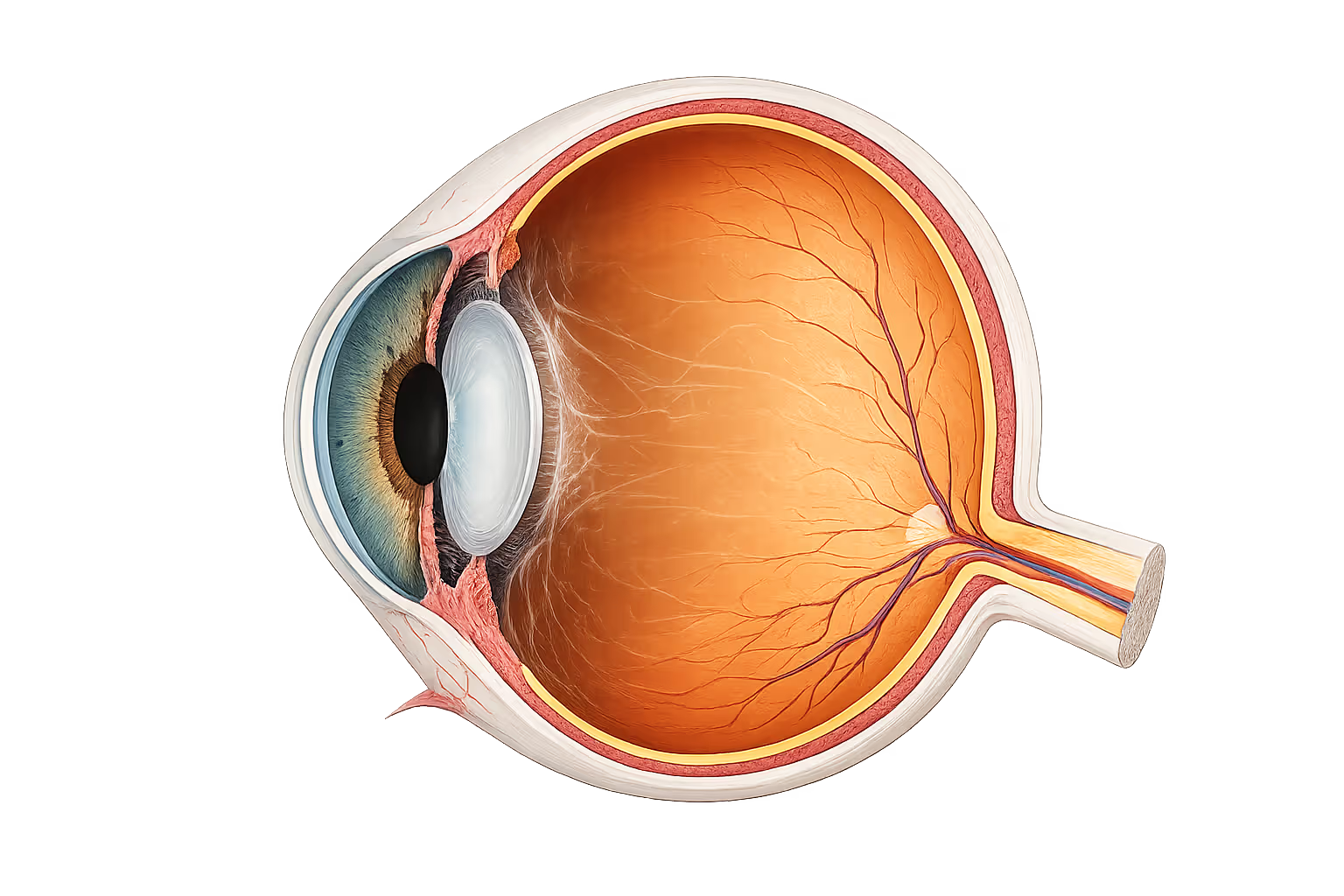
Overview
Progressive retinal atrophy is a group of inherited eye disorders in which the light-sensitive cells of the retina gradually deteriorate. This analysis focuses on progressive rod-cone degeneration, also known as prcd-PRA, PRA-prcd, PRCD-related progressive rod-cone degeneration or PRCD-related progressive retinal atrophy.
Dogs with prcd-PRA are usually born with normal eyes and normal vision. Later in life, the first signs can include night blindness, uncertainty in dim light and difficulty navigating. As rods and cones continue to degenerate, daytime vision may also decline and blindness can eventually occur.
This DNA test detects the PRCD variant c.5G>A. The variant affects the PRCD protein, which is important for photoreceptor function and long-term survival in the retina.
prcd-PRA is inherited as an autosomal recessive trait. A dog with two normal copies is clear for the tested variant. A dog with one copy is a carrier and is usually not clinically affected by this specific variant. A dog with two copies has a genotype consistent with risk for this form of PRA.
The result helps breeders and veterinarians identify carriers and genetically affected dogs early, before eye changes necessarily become visible. This supports targeted breeding choices, helps avoid unintended carrier-to-carrier matings and adds useful context to ophthalmic examination. Because PRA is genetically heterogeneous, a clear result for this variant does not exclude every other inherited form of retinal atrophy.
Included subanalyses
This analysis includes the following subanalysis:
Allele combinations & result interpretations
Sampling and submission guidelines
References

