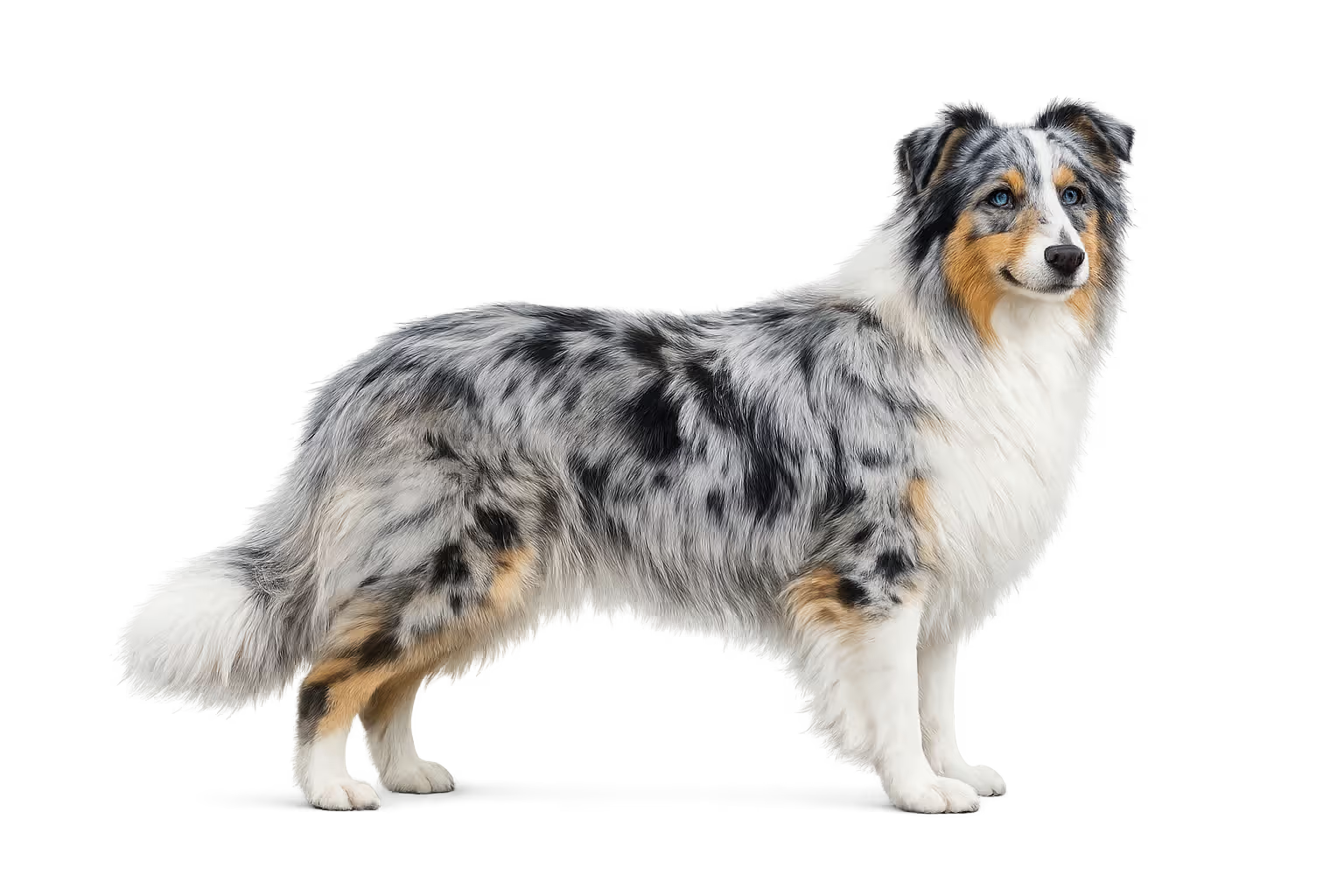
Below, for each tested locus, you will find the possible allele combinations that may be reported within this analysis, together with a brief explanation of their genetic meaning. The interpretation of possible interactions between different loci is included in the report, but is not shown here in full because that would lead to too many combinations on this page. The final expression may also depend on other genes and their interaction.
Merle M-locus combination interpretation
Genotype / allele combination: m/m - Non-merle
No Merle alleles were detected in this M-locus analysis. This fits m/m and a non-merle result for the tested PMEL Merle alleles.
Genotype / allele combination: m/Mc - Cryptic merle
This combination contains only short cryptic Merle alleles. Visible merle patterning is usually absent or very subtle, but the alleles are important for accurate breeding decisions.
Genotype / allele combination: Mc/Mc - Cryptic merle
This combination contains only short cryptic Merle alleles. Visible merle patterning is usually absent or very subtle, but the alleles are important for accurate breeding decisions.
Genotype / allele combination: m/Mc+ - Cryptic merle
This combination contains only short cryptic Merle alleles. Visible merle patterning is usually absent or very subtle, but the alleles are important for accurate breeding decisions.
Genotype / allele combination: Mc/Mc+ - Cryptic merle
This combination contains only short cryptic Merle alleles. Visible merle patterning is usually absent or very subtle, but the alleles are important for accurate breeding decisions.
Genotype / allele combination: Mc+/Mc+ - Cryptic merle
This combination contains only short cryptic Merle alleles. Visible merle patterning is usually absent or very subtle, but the alleles are important for accurate breeding decisions.
Genotype / allele combination: m/Ma - Atypical merle
This combination contains an atypical Merle allele. Appearance can range from little visible merle to subtle dilution or a brownish tone; other coat-colour genes can influence the final result.
Genotype / allele combination: Mc/Ma - Atypical merle
This combination contains an atypical Merle allele. Appearance can range from little visible merle to subtle dilution or a brownish tone; other coat-colour genes can influence the final result.
Genotype / allele combination: Mc+/Ma - Atypical merle
This combination contains an atypical Merle allele. Appearance can range from little visible merle to subtle dilution or a brownish tone; other coat-colour genes can influence the final result.
Genotype / allele combination: Ma/Ma - Atypical merle
This combination contains an atypical Merle allele. Appearance can range from little visible merle to subtle dilution or a brownish tone; other coat-colour genes can influence the final result.
Genotype / allele combination: m/Ma+ - Atypical merle+
This combination contains a Ma+ allele. Ma+ can be more visible than Ma and, depending on the allele combination, may produce stronger dilution, tweed-like patterning or pigment loss toward white.
Genotype / allele combination: Mc/Ma+ - Atypical merle+
This combination contains a Ma+ allele. Ma+ can be more visible than Ma and, depending on the allele combination, may produce stronger dilution, tweed-like patterning or pigment loss toward white.
Genotype / allele combination: Mc+/Ma+ - Atypical merle+
This combination contains a Ma+ allele. Ma+ can be more visible than Ma and, depending on the allele combination, may produce stronger dilution, tweed-like patterning or pigment loss toward white.
Genotype / allele combination: Ma/Ma+ - Atypical merle+
This combination contains a Ma+ allele. Ma+ can be more visible than Ma and, depending on the allele combination, may produce stronger dilution, tweed-like patterning or pigment loss toward white.
Genotype / allele combination: Ma+/Ma+ - Atypical merle+
This combination contains a Ma+ allele. Ma+ can be more visible than Ma and, depending on the allele combination, may produce stronger dilution, tweed-like patterning or pigment loss toward white.
Genotype / allele combination: m/M - Classic merle
This combination contains the classic M allele. It usually fits a visible merle pattern with alternating diluted and fully pigmented dark areas; exact expression still depends on other loci.
Genotype / allele combination: Mc/M - Classic merle
This combination contains the classic M allele. It usually fits a visible merle pattern with alternating diluted and fully pigmented dark areas; exact expression still depends on other loci.
Genotype / allele combination: Mc+/M - Classic merle
This combination contains the classic M allele. It usually fits a visible merle pattern with alternating diluted and fully pigmented dark areas; exact expression still depends on other loci.
Genotype / allele combination: Ma/M - Classic merle
This combination contains the classic M allele. It usually fits a visible merle pattern with alternating diluted and fully pigmented dark areas; exact expression still depends on other loci.
Genotype / allele combination: Ma+/M - Classic merle
This combination contains the classic M allele. It usually fits a visible merle pattern with alternating diluted and fully pigmented dark areas; exact expression still depends on other loci.
Genotype / allele combination: M/M - Double merle / increased risk
This combination contains two M alleles. It is generally interpreted as double merle and requires very careful assessment because of the increased risk of hearing and eye problems.
Genotype / allele combination: m/Mh - Harlequin / Mh merle
This combination contains the Mh allele. Mh can produce minimal, harlequin-like or highly variable merle patterning; especially with other longer Merle alleles, this requires extra attention.
Genotype / allele combination: Mc/Mh - Harlequin / Mh merle
This combination contains the Mh allele. Mh can produce minimal, harlequin-like or highly variable merle patterning; especially with other longer Merle alleles, this requires extra attention.
Genotype / allele combination: Mc+/Mh - Harlequin / Mh merle
This combination contains the Mh allele. Mh can produce minimal, harlequin-like or highly variable merle patterning; especially with other longer Merle alleles, this requires extra attention.
Genotype / allele combination: Ma/Mh - Harlequin / Mh merle
This combination contains the Mh allele. Mh can produce minimal, harlequin-like or highly variable merle patterning; especially with other longer Merle alleles, this requires extra attention.
Genotype / allele combination: Ma+/Mh - Harlequin / Mh merle
This combination contains the Mh allele. Mh can produce minimal, harlequin-like or highly variable merle patterning; especially with other longer Merle alleles, this requires extra attention.
Genotype / allele combination: M/Mh - High-risk Merle combination
This combination contains two longer Merle alleles, including Mh. It requires very careful assessment because of the increased likelihood of pigment loss toward white and hearing or eye problems.
Genotype / allele combination: Mh/Mh - High-risk Merle combination
This combination contains two longer Merle alleles, including Mh. It requires very careful assessment because of the increased likelihood of pigment loss toward white and hearing or eye problems.